Teaching What Matters:
The Essential Concepts Framework + Resources
Teach the ideas students will use again & again.
The Essential Concepts Framework identifies the most important ideas within each discipline and gives teachers ready-to-use resources to help students understand them deeply, connect them, and transfer their learning to new situations.
Created by four-time bestselling author Julie Stern, named by John Hattie as his “go-to person” on transfer of learning.

We cannot future-proof the curriculum.
We can build learning that transfers.
BUILD LEARNING AROUND WHAT MATTERS MOST
The Essential Concepts Framework helps schools focus learning around the ideas students will encounter, refine, and use again and again.

Identify
What Maters
Focus on recurring, foundational ideas that unlock important learning within the discipline.

Build Deep
Understanding
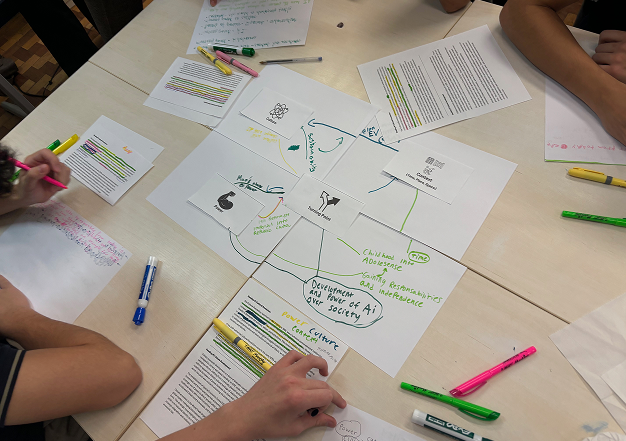
Give students multiple ways to explore, represent, discuss, and connect abstract ideas.

Transfer
Learning
Help students recognize and use those ideas when the topic, task, or context changes.
A FRAMEWORK FOR WHAT MATTERS.
RESOURCES FOR HOW TO TEACH IT.
THE FRAMEWORK
Know what matters.
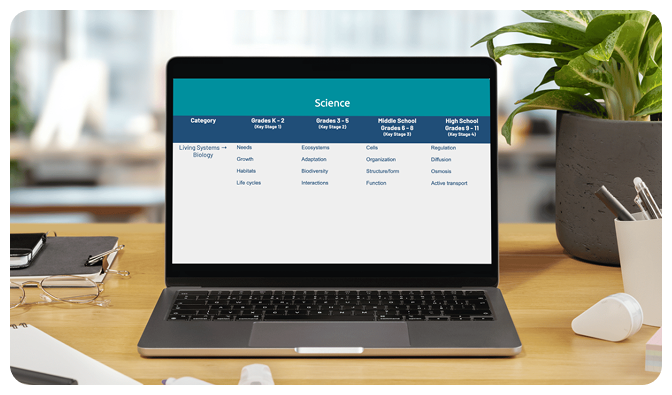
The Essential Concepts Framework identifies the most foundational, recurring, and transferable concepts within each discipline and age band, from early childhood through secondary.
It gives schools a clearer view of the ideas students should revisit and deepen over time.

THE TEACHING RESOURCES
Bring those ideas to life.
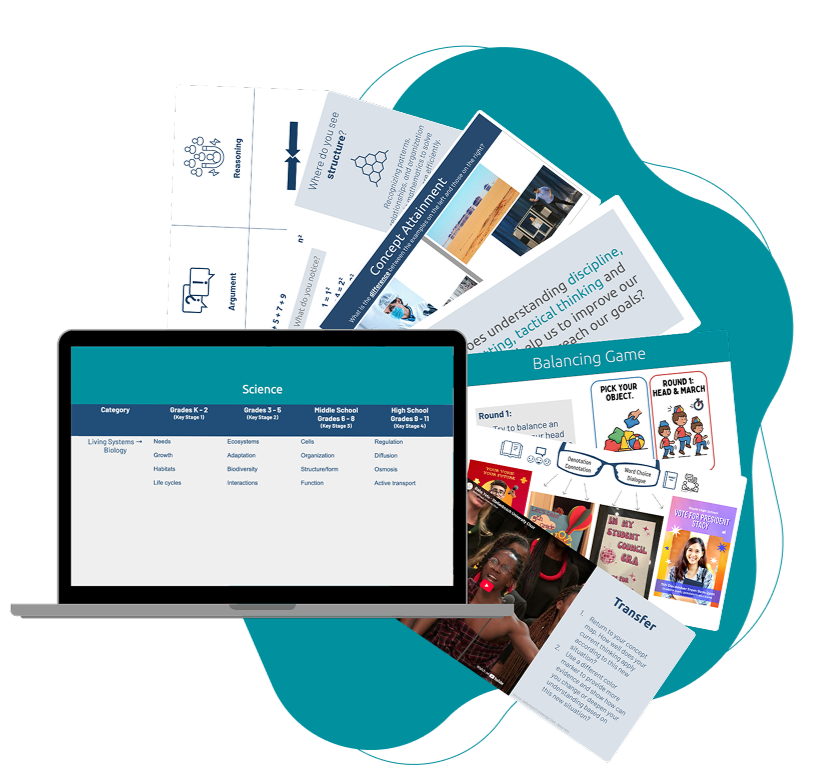
Each essential concept includes ready-to-use resources designed to help students build meaning, make connections, inquire, and transfer their understanding.
Teachers can use a complete learning sequence or select the resources that best fit their students and curriculum.
WHAT MAKES A CONCEPT ESSENTIAL?
Essential does not simply mean important.
An essential concept earns repeated attention because understanding it makes other learning more powerful.

01
RECURRING
Does the concept
warrant repeated attention across years of learning?
02
FOUNDATIONAL
Does understanding this concept unlock important learning within the discipline?
03
TRANSFERABLE
Will students use this idea beyond one lesson or unit?
04
DEVELOPMENTALLY APPROPRIATE
Is this concept worth understanding at this stage?
05
CONNECTION-RICH
Does it help students connect ideas and build a stronger schema?
ONE CONCEPT.
MULTIPLE PATHWAYS INTO UNDERSTANDING.
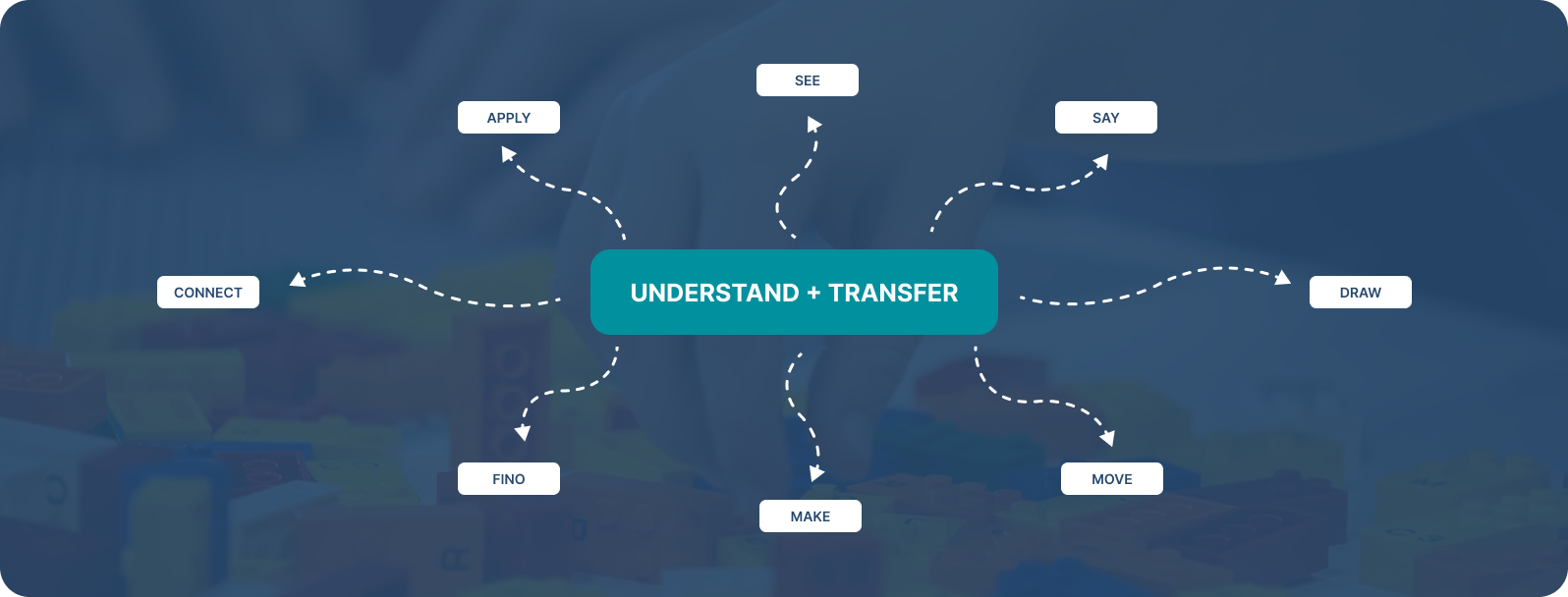
Each teaching deck gives teachers multiple ways to help students build meaning, connect ideas, and use their understanding.
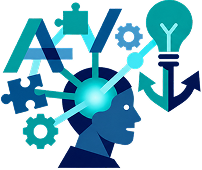
CONCEPT ICON
Make the abstract visible.
A memorable visual gives students an anchor for an idea they can revisit across learning experiences.
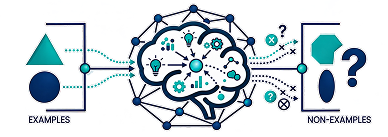
CONCEPT ATTAINMENT
Define concepts via examples.
Students notice patterns, test ideas, refine their thinking, and develop increasingly precise understanding.

INQUIRY QUESTION
Spark meaningful investigation.
Inquiry Questions invite students to explore how the concept operates within the discipline and beyond it.
ACQUIRE MEANING.
CONNECT IDEAS. TRANSFER LEARNING.
UNIVERSAL DESIGN FOR LEARNING
Students vary in what engages them, what helps an abstract idea make sense, and how they best develop
and communicate understanding.
The Essential Concepts resources give teachers multiple ways to invite students into the same rigorous conceptual learning.
Make abstract ideas easier to see and understand.
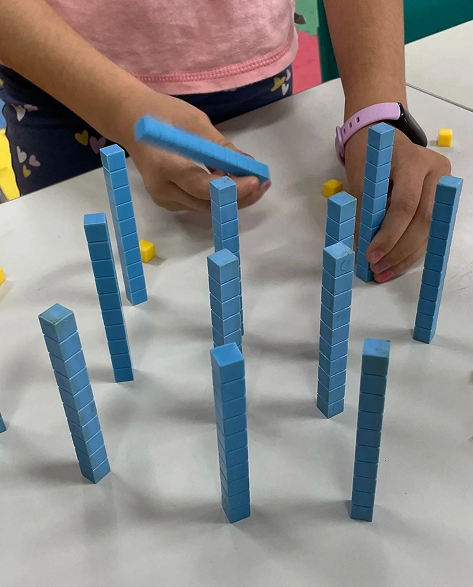
Make abstract ideas easier to see and understand.
Make abstract ideas easier to see and understand.
One rigorous goal. Multiple pathways.
Students keep returing to the core ideas through different forms of access, engagement, and expression.